


Bài viết

 đậu xanh trứng muối các bạn thuộc “team” nào nhỉ? Chắc hẳn những hương vị này không còn xa lạ với mọi người mỗi dịp Trung Thu đến nữa rồi phải không nè.
 .
.
 Đôi điều về Tsukimi-Dango - Bánh Trung thu đậm chất xứ Phù Tang Cách thưởng thức Tsukimi-Dango “đúng nghĩa”
Dango Daikazoku

So why was I struggling to fully enjoy it?
A lot of it is overwhelm. BG3 throws so much at you that even I — someone who has played D&D on and off for a few years — initially failed to grasp or even utilise the freedom the game provides. It’s one thing to sit with a group of people and use the theatre of your mind to overcome obstacles around a table while controlling a single character. It’s something very different to apply that logic to a game world which lays out all of the functions, features, actions and abilities right in front of you and tells you to have at it with a party of four.
After a dozen hours or so, I discovered the answer: stop playing it like a videogame. BG3 is more like a sandpit, encouraging you to try weird things, stumble upon solutions through audacity or accident, and roll with the outcomes. This freedom comes at the expense of a strong story pulling you through, but the individual quests and companion arcs you’ll encounter along the way more than make up for it.

The gist of the campaign is that you — and the companions you meet on the road — have all been infected with Mind Flayer tadpoles. Ordinarily, these should turn you into Mind Flayers in mere days, but in this case something is preventing the transformation from happening. Your task is to try and work out what is happening, and why. That’s pretty much the crux of the first act of three, which sees you start in a Mind Flayer prison ship, crash land on a beach, and then make your way inexorably to the titular city of Baldur’s Gate, via a host of different side quests. You’ll have the option of saving or dooming a tiefling village, forging a path through the Underdark, choosing to side with any number of different factions — including old favourites The Flaming Fist and the Zhentarim — and more.
Larian has faithfully translated the 5e rulebook to the screen, which means you should pay careful attention to all of the skills your party of characters has and use them prudently. If you’re playing as a thief, you probably want your custom-made character to try lockpicking a chest rather than your barbarian buddy. Similarly, a conversation with a wizard is going to go better if you handle it with one of your own magical party members than an arcana-illiterate chump. Each conversation will usually have options which call upon different skills such as Perception, Deception, Insight, Intimidation, and so on. These options then need to pass a dice roll baseline for which you may add bonuses depending on the character attempting them. Your fighter is more likely to get a bonus when trying to intimidate someone, for instance, whereas a thief might be better at distracting someone with Sleight of Hand. Background and race can also play a part in these checks, as can different buffs you may receive from equipment, potions or spells. Indeed, there are so many different ways to approach any given encounter that the previously mentioned overwhelm might cause an anxiety attack. It might be tempting to save scum your way through the game to try and find the “optimum” outcome for each challenge, but your nervous system will thank you for just accepting the roll of the dice and letting go. In a lot of cases, what might be considered a “failure” can actually open doors that you don’t expect. The game actively encourages you to experiment and rewards you for doing so...most of the time.

Needless to say though, you’re going to get involved in combat at some point. Here, Larian has swapped in a similar engine it used for its Divinity games but moulded it around the D&D template. Each character rolls for Initiative (turn order) and then makes their move in sequence. You can see who is up next — or if two or more of your party rolled the same Initiative, you can flit between the order for them and move in whichever turn you like — as well as the turn of each enemy. This will allow you to focus on potentially taking out enemies who are due to attack sooner. The environments are full of potential for even more experimentation; barrels of oil or booze to set fire to or blow up, flora to prod and release area-wide effects, mountains and chasms to push foes down with a bonus action, and more. Your spells can be combined in fun ways too: casting Grease might make enemies fall over on their turn if they enter the area, but if you then set fire to it when they’re prone you’ll create a huge fiery carpet. Water can similarly be electrified or frozen, and even things like bridges or structures can be taken down — along with anyone standing on them.

It might seem initially that the easiest thing to do is just hit the melee or ranged attack button for your non-spell wielders, while spamming area or damage spells at the bad guys from afar courtesy of your magic users. After a while though, when your team has levelled up enough to gain some more interesting abilities, more options open up. Your Eldritch Blast can get modified not just to cause damage but also knock people back when it hits them — useful for a monster perched precariously on a ledge. A thief’s Uncanny Dodge at level 5 allows them to take half damage on an attack, which means they can get more involved in melee. As your party improves, more options become available. Combat will certainly be an adjustment for those expecting something similar to the first two Baldur’s Gate games but I actually preferred Larian’s take on it. Failure, and losing characters, doesn’t mean the end. A character called Withers lurks in your camp and can resurrect anyone who gets the wrong end of a mace to the face as well as letting you recustomise your character if you decide against your initial build.
But how does it look and sound? On the audio front at least, it’s wonderful. Voice acting is superb across the board, with every single NPC you come across having its own voice and personality — and that includes the animals. You’re likely to have stumbled across plenty of video snippets of Speak With Animals across YouTube, featuring squirrels, oxen and the like. But it really is a joy to converse with creatures, especially when they are as varied and interesting as they are here. The orchestral soundtrack is as bombastic as you would hope for an RPG and the incidental sound effects, crackling fires, bustling city hubbub, and sizzling spell effects are all great.

The graphical department is a bit of a mixed bag, however. Having played on both PC and PS5, I can honestly say the PS5 experience felt more stable. My GTX 2600 Super should have been able to handle the game fine, yet I constantly struggled with pop-in, black maps which took a minute to load, and woeful loading times overall. Even on PS5, area loading was not super fast, and moving around the map often resulted in some weird cutting effects and transparent environmental glitches which wouldn’t have been out of place on a game ten years older. For the most part though, when it’s stable — which is the majority of the time on console — BG3 looks pretty good. Larian hasn’t solved the uncanny valley, but that argument can be levelled at studios far bigger than it. The different regions you explore are markedly so: from the blue-black hues of the Underdark through to the rainbow gleam of the Sunlit Wetlands and the rusty colours of the Zhentarim lair, each area feels unique.
In what might be the first time I’ve experienced this with an RPG, I can honestly say that gameplay also feels more streamlined on console. The PC interface gives you a bit more flexibility when exploring your surroundings, but it’s at the cost of a cluttered HUD filled with inventory items and spells. The PS5 version takes some adjustment to move from PC to a series of radial actions, but controlling the party is done directly rather than pointing and clicking, and it just works better.
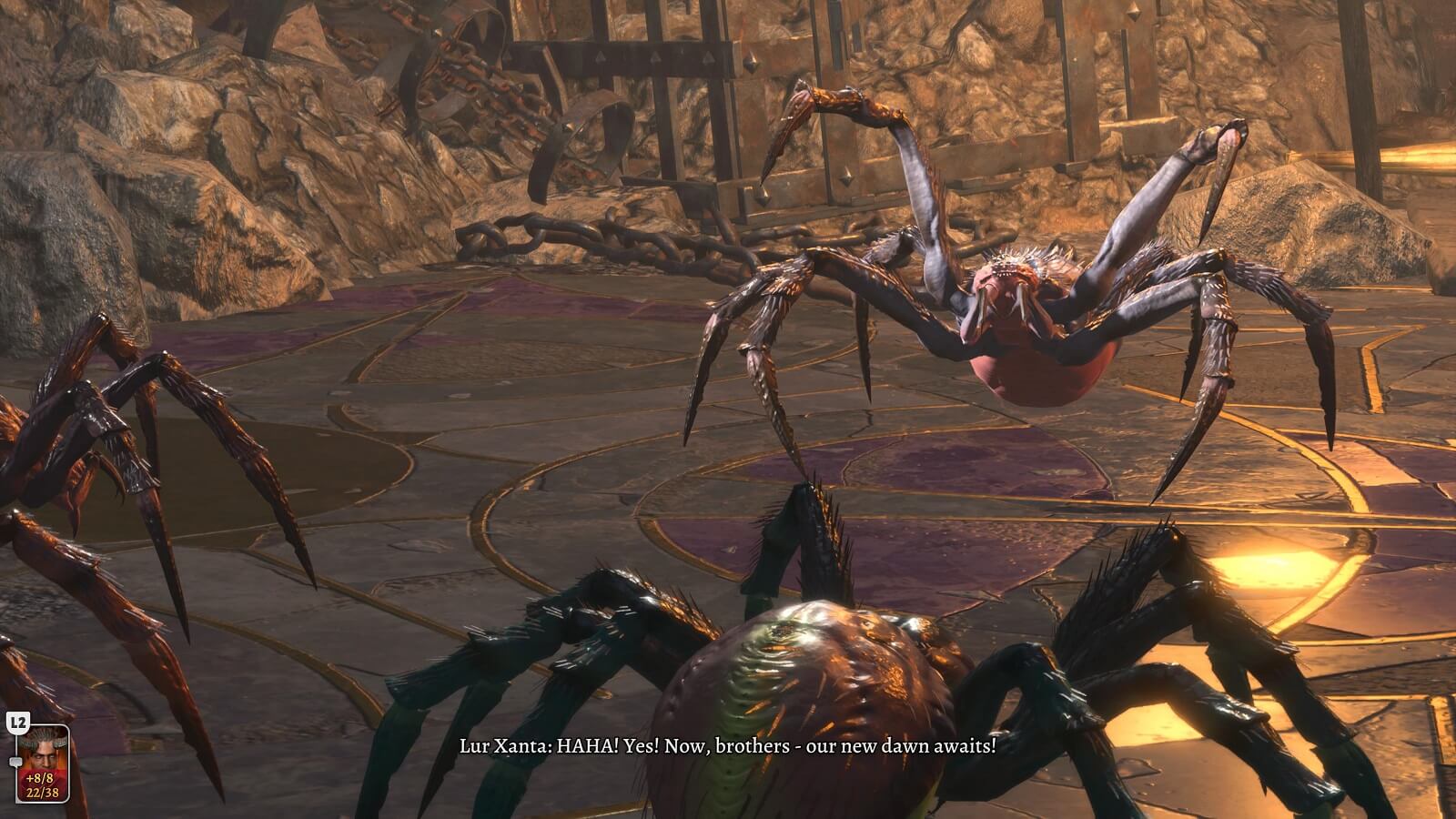
When it comes to the inventory system though, neither format wins. The inventory is a writhing mass of stuff which you need to be constantly on top of. There’s no “sellable” section for you to dump your loot into, which in this day and age is frankly ridiculous. Splitting items out is a real pain, and you’ll spend more time swapping items back and forth between characters than actually using them. There are also some odd oversights that caused frustration: for instance, barbarians can use heavy armour, but at the cost of using Rage properly — something that isn’t highlighted on the armour text if you’re looking to purchase it with a barbarian character.
The party, however, is a lot of fun to interact with. Astarion is played with the right level of camp, Lae’zel is bonkers, and Shadowheart drips earnestness. And those are just three of the ten you can play — each with their own backstory and quest to complete. Of course, their personalities and alignments may clash and result in one or the other (or both) leaving you if you don’t manage the situation properly. But there is enough content here for you to have two or three full playthroughs with completely different parties, experiencing different outcomes and aligning with different factions. There is a “good” and “bad” ending, though the latter, as always, feels underserviced in comparison. Each quest can be solved in several ways with some creative thinking, and even today Reddit is filled with players who stumbled upon a fun way to tackle problems outside of normal gaming tropes — such is the joy of D&D.
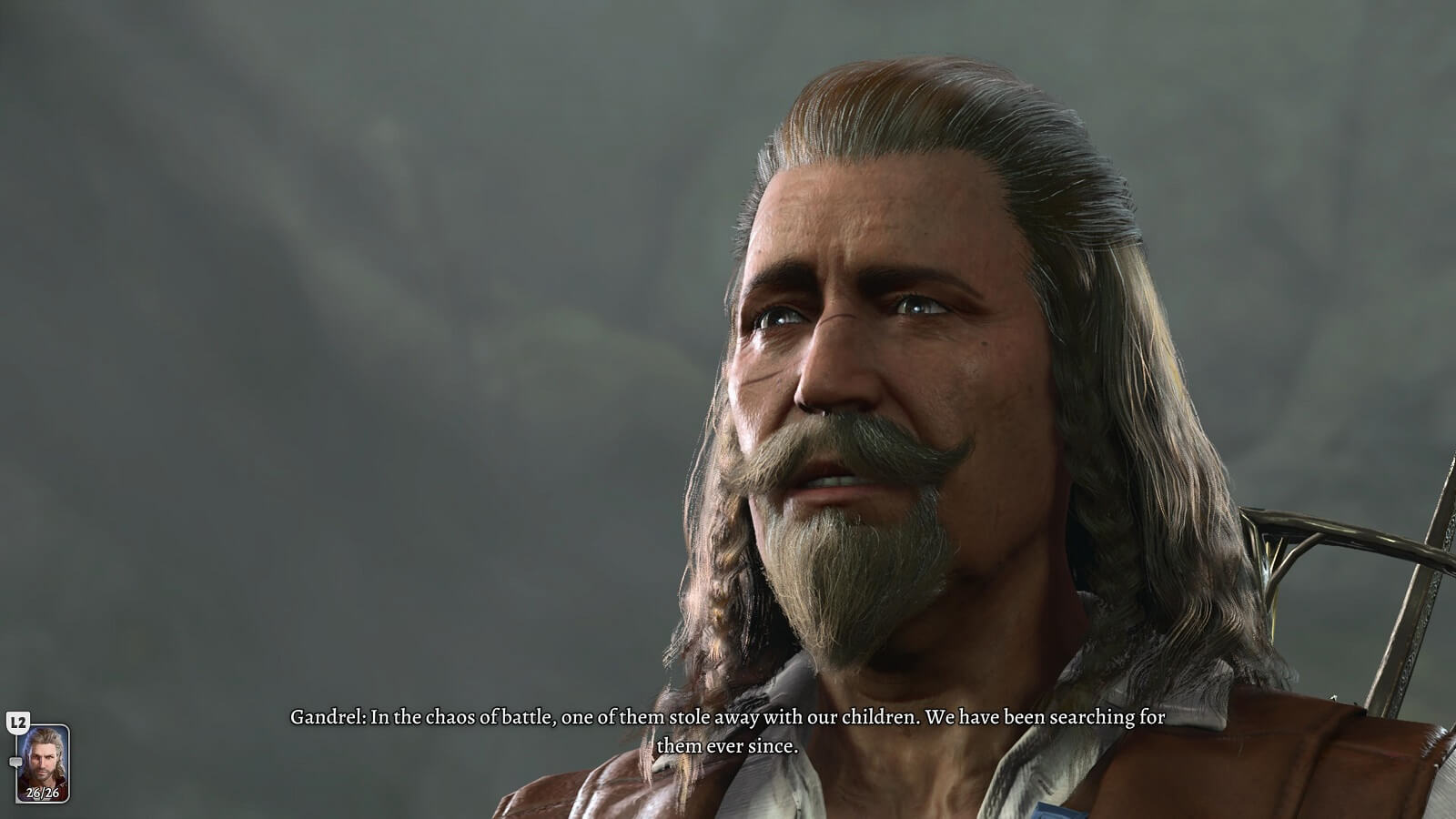
The downside to having so many potential options for completing quests is that you will almost certainly break at least one of them on your playthrough. If you approach a task in the “wrong” way — i.e. one the developers haven’t accounted for — or uncover information before you’re meant to, there’s every chance you’ll have a quest stuck in an incompletable state for the rest of the act. An Act One quest to investigate a beach bugged out for no explicable reason; I rescued a Tiefling child and was then told to go and speak to a Tiefling woman I’d met earlier for a reward. However, meeting her ahead of time resulted in an event not triggering, so whatever experience or recompense I was due never materialised and all I could do was carry on with other quests. Luckily, thanks to some successful prior rolls, it didn’t have as much of an impact on me as on some players.

Unfortunately, the deeper you get into the game, the more linear it feels. The freedom that Act One lays before you becomes more and more constrained in Acts Two and Three. Conversely, the number of bugs increases dramatically. Additionally, conversations start to go wayward, triggers are missed and options are closed off, all for reasons that appear inexplicable. The freedom that was promised at the start — the multiple routes into an area, or ways of handling an encounter — dissipate in favour of scripted scenes and forced outcomes. Battles take precedence and they are still very enjoyable, but the role-playing is no longer the focus. It’s clear that the first half of the game is where most of the polish was applied, but even now, months after its release and numerous patches and builds (and as of recently, new character epilogues), I’m struggling to see how the near universal perfect scores can be justified. Baldur’s Gate 3 is a great game, but certainly not a perfect one. Even so, kudos should be given to Larian for taking on such a hallowed franchise and giving it the respect it deserves. The ambition is clear and while the developer doesn’t quite manage to stick the landing or the promise of the first twenty to thirty hours, it’s a damn fine try.
Baldur's Gate 3 Review

"Nỗi phiền muộn của Haruhi Suzumiya"
Kyon, một học sinh trung học bình thường, như bao đứa trẻ khác, cậu từng tin vào siêu năng lực, du hành thời gian hay là alien (vậy mà cậu không tin vào ông già Santa). Hết cấp 2 cậu đã nhận ra đó chỉ là những thứ hư cấu và từ bỏ. Cho đến khi bắt đầu năm đầu tiên của cấp 3, cậu gặp một cô gái mạnh dạn tuyên bố rằng cô ta ta không hề có hứng thú với loài người mà chỉ chỉ quan tâm đến những sự kiện kì lạ như người du hành thời gian, ESPer hay alien. Cô gái ấy là Suzumiya Haruhi, ban đầu ai cũng nghĩ cô ta chỉ nói đùa để thu hút chú ý, nhưng Kyon lại nhận ra cô rất nghiêm túc trong lời nói. Trong giờ giải lao cậu đùa bóng gió kêu Haruhi làm 1 câu lạc bộ tìm kiếm hiện tượng siêu nhiên, ai ngờ cô làm thật và ép cậu phải tham gia như phụ tá. Kể từ đó cuộc đời của Kyon bẻ lái theo hướng khác, cậu vướng vào nhiều rắc rối và tận mắt chứng kiến bí ẩn của vũ trụ dần hé mở.
Truyện thể loại Comedy, School life, Supernatural là chính nên đừng mong chờ mấy cảnh action nhiều, chủ yếu xoay quanh cuộc sống thường nhật của Kyon và bạn bè cậu. Nhưng không phải vì thế mà bớt hay, shounen có cái hay của shounen, school life có cái hay của riêng nó.
Cốt truyện nó thực sự không quá sâu, dòng thời gian cũng không rõ ràng (đọc xong tập đầu rồi thì bạn đọc mấy tập còn lại không theo thứ tự cũng không bị ảnh hưởng nhiều, vì mỗi tập là mỗi cuộc phiêu lưu riêng của nhóm bạn). Tuy nhiên vẫn có sức hút riêng trong mỗi tập, một số thì mang tính gây hài, một số về cuộc sống, một số lại như trinh thám dù ít hack não hơn
Câu chuyện được kể chủ yếu qua góc nhìn của Kyon, và những tình tiết gây hài cũng thường là những đoạn Kyon đá xoáy Haruhi hay những đoạn ecchi. Ecchi trong truyện thật sự không nhiều nhưng cũng chỉ đóng vai trò làm tình huống gây hài là chính thôi
Lái qua movie chút, “Sự biến mất của Haruhi Suzumiya” là movie tiếp nối phần trước. Lấy bối cảnh sau bữa tiệc giáng sinh, Kyon tỉnh dậy và phát hiện ra Haruhi biến mất và không ai biết đến cô ta, Nagato giờ chỉ là học sinh bình thường, cậu chỉ có manh mối duy nhất là cái bookmark mà Nagato cũ để lại. Sau khi vượt qua bao nhiêu khó khăn cậu cũng tìm được cách đưa thế giới về như cũ. Nhưng lại gặp thử thách lớn: chọn giữa cuộc sống yên bình mà cậu hằng mong ước mà không có Haruhi, hay quay về thế giới cũ, và cậu đã thổ lộ tình cảm của mình đối với Haruhi nên đã hi sinh thế giới yên bình mà cậu khát khao để trở về với Haruhi. Điều này sẽ làm fan Kyon x Asashina hay Kyon x Nagato buồn nhưng mình lại thấy vui khi Kyon có thể đưa ra quyết định trưởng thành như vậy.
Nhân vật:
-Kyon: tên thật vẫn chưa biết.
Nhìn vào có thể thấy cậu hơi chán đời, không có gì nổi bật. Trừ việc cậu là đứa duy nhất bình thường trong nhóm, hay đi theo Haruhi vì bị ép. Cốt truyện xoay quanh góc nhìn của cậu. Thật sự thì cậu cũng không bình thường lắm khi vô tình tập hợp cái đám toàn dị nhân và có thể chịu đựng được đám đó. Cậu có cảm tình dành cho Haruhi, dù trông như cậu ghét Haruhi nhưng cậu lại là người lo lắng và hiểu Haruhi nhất. Cậu luôn ước ao có 1 cuộc sống học sinh trung học bình thường, nhưng đến sự kiện Haruhi biến mất cậu đã bỏ lại ước ao đó vì cậu yêu Haruhi và cô đã làm cuộc sống cậu thú vị hơn
-Haruhi Suzumiya:
Một cô bé năng động, chỉ hứng thú với ESPer, du hành thời gian, alien và những thứ kì lạ khác (nghe hơi hâm nhỉ) Cô là người thành lập và là trưởng đoàn S.O.S sau khi nghe theo lời đùa của Kyon. Có giả thuyết cô như một thần, có khả năng thay đổi thực tại mà cô không biết. Tuy không có hứng thú gì với con người nhưng cô dần có tình cảm với Kyon. Đến mức cô (vì ghen) đã vô tình thay thế thế giới cũ bằng thế giới mới nhưng chỉ có 2 người, Kyon cũng là người đầu tiên cô thấy xấu hổ khi thay đồ trước mặt cậu dù bình thường cô nàng thản nhiên thay đồ trong lớp học.
-Nagato Yuki:
Một alien được cử đến để giám sát Haruhi sau sự kiện bùng nổ thông tin do Haruhi, là người ít nói, mọt sách. Có khả năng thao túng dữ liệu của mọi thứ xung quanh, na ná reality wraping. Cô cũng thích Kyon, đến mức gây ra sự kiện Haruhi biến mất để giải phóng cậu ta, nhưng vẫn cho cậu lựa chọn giữa thế giới mà cậu hằng mong với thế giới hiện tại. Trong thế giới song song thì Nagato chỉ là học sinh bình thường làm quản lý câu lạc bộ đọc sách, ấy vậy mà cô vẫn giúp Kyon tìm giúp người mà cô không biết
-Asahina Mikuru: best girl của truyện
Người vượt thời gian được cử đến để tìm hiểu vụ đột biến bùng nổ thông tin (giả thuyết là do Haruhi) và bị kẹt ở lại. Được Haruhi mời vào đoàn vì “moe" Là một cô gái vụng về, hay xấu hổ nên thường là nạn nhân của những trò bắt nạt của Haruhi, được cái pha trà rất ngon. Và đương nhiên là cô ...
...
...
...
...
cũng thích Kyon (tại sao thế tác giả
 )
)-Koizumi Itsuki:
Một ESPer bị giới hạn khả năng trong không gian kín. Cùng với những ESPer khác, cậu tin rằng sự tồn tại năng lực của mình là do Haruhi. Cậu luôn là người có suy tính trước khi hành động. Theo movie thì cậu thích Haruhi nhưng luôn bị cái bóng của Kyon che khuất
Có lẽ Haruhi là God thật rồi

Art:
Do KyoAni xưởng lò waifu nổi tiếng nên art mang đậm chất best girl, waifu các thứ
Thành công trong việc tạo dựng hình ảnh Haruhi nhí nhảnh, trẻ con và năng động
Asashina đúng chuẩn best girl “moe, hậu đậu, maid”
Nhạc:
Nhạc nói chung là hay, nhưng mình đặc biệt thích bài God knows với Hare Hare Yukai (vì điệu nhảy huyền thoại chăng?)
Review Haruhi Suzumiya Series

A lot of the reviews/discussions for this VN are years old, and due to its release on steam/switch I figured I'd give it a go and do a quick review since I just finished it!
Note: I played the fan translated 18+ version, so the h-scene stuff won't be on the new releases.
This VN is a eroge/slice of life for the entirety of it's common route, and switches into different genres during each girls route, which for me, was a very welcome change of pace due to its very very long common route. Each route focuses on one of the give female heroines and shows how Yuuji (the MC) "saves" them and fixes their psychological issues, while completely ignoring his own.
Yuuji is a very interesting character and is definitely not a just a "stand in for the player" which is good, unless you don't like the MC. The game does not fully delve into Yuuji except on makina's route, and even then it's just bits and pieces and doesn't explore yuuji's past very much. But if you're dying to get more info on yuuji play makina's route first. I was not particularly a fan of Yuuji, although he can be funny at times. I understand hes a military type, but his sexist streak (calling the girls "woman", telling them what to do, treating them all like morons, falling for amane during her route for being "convenient") annoyed me.
I particularly enjoyed michiru's route the most, because it felt the most real (other than the dual personality thing). What I mean by real is that it felt that Yuuji actually cared for her and the h-scenes felt natural, not shoehorned in. This route gave me the most feels by far, and if you can get past the reason for the multiple personalities, was very very entertaining. I felt Michiru evolved a lot as a character and even her base character (fake tsundere) was funny in itself. The route probably has the best good ending and the saddest bad ending in the game (to me)
Saachi's route went into pre-military Yuuji and was the "childhood friend" route. I liked saachi but I felt it took her too long to evolve and she stuck to her "taking all orders seriously" for far too long. Most of this route is basically Yuuji trying to figure out what orders to give her to make her normal again. I don't feel like Yuuji particularly loved her by the end of her route, but the gradual buildup of h-scenes was appreciated because it felt a little more natural than the others. The endings in this route were ok, but noting too special.
Yukinos route was probably my second favorite route She probably felt the most real of all the characters, even though she starts as the standard kuudere type. I don't like how they show a lot more in-depth parts of her personality (like how smart she is, trustworthy, Pervy) on other routes and not on her own. Yuuji makes a lot of dumb ass decisions in this route (taking yukino back to the same spot over and over again) but either way, it feels like they fall in love in this route and I appreciated that. Yuuji does one really sweet thing for her and it's probably one of my favorite parts in all of the VN. Other than what I mentioned above this route feels more based in reality and is a lot more action ortiented than michiru's route or saachi's route. I really liked the endings in this route and both good and bad felt fully fleshed out and not thrown in real quick.
Amanes route was.....interesting. while it's a complete rip off of a particular movie from 20 or 30 years ago, I felt it DRAGGED on. You do get introduced to yuuji's sister in this route and she is a great character. I just wish that the route was either shorter or just more happened. It's like tons of flashback and then BAM THE END. This was sad to me because I really liked her character in the common route and she is kind of set up to be the "main" heroine. Her reasons for "falling" for Yuuji are really dumb (opinion) and it doesn't feel like they love each other at all by the end of the route. Most of the good ending (super flash forward) was dumb and it didn't feel real at all. At least in her bad ending you get some good info, so it's definitely worth playing just for that. Her h-scenes were shoehorned in and they felt uncomfortable for me, especially after knowing why she was such a horndog in the first place. She had no character development at all and stays exactly the same from the beginning of the game to the end.
Makina's route was kind of fun for yuuji's backstory and psychology (somewhat) I didn't like the forced incest stuff (makina calling Yuuji papa, even though they are only a year apart). Her way of speaking was fun, and she has some of the best jokes in the game. Her h-scenes were the most shoehorned in, they felt completely unnatural and we're super awkward to say the least. She did evolve as a character quite a bit (although her speaking stayed the same). This route is one of the only ones other than yukinos that had a specific villian to overcome, and said villian did some seriously f-ed up stuff. Makinas endings were by far the worst in the game. This route was very long and drawn out. I never felt as if they fell in love at all. Yuuji just wanted to pay it forward and it never felt like he truly loved her, he just had a duty to fulfill.
That's it in a nutshell! I'd like it if people who played the all ages versions comment as well because I'd like to know the real differences between the games. Let's have a spoilery discussion below!


